
Tania Malik will represent Behavioral Health Strategy at the 2026 Behavioral Health Tech Conference, where leaders from across the behavioral health ecosystem will come together to explore how technology and innovation are shaping the future of care. From AI and data interoperability to sustainable care models, expanding access and payer-provider partnerships, the conference will examine how emerging technologies and new approaches can address some of behavioral health’s most pressing challenges.
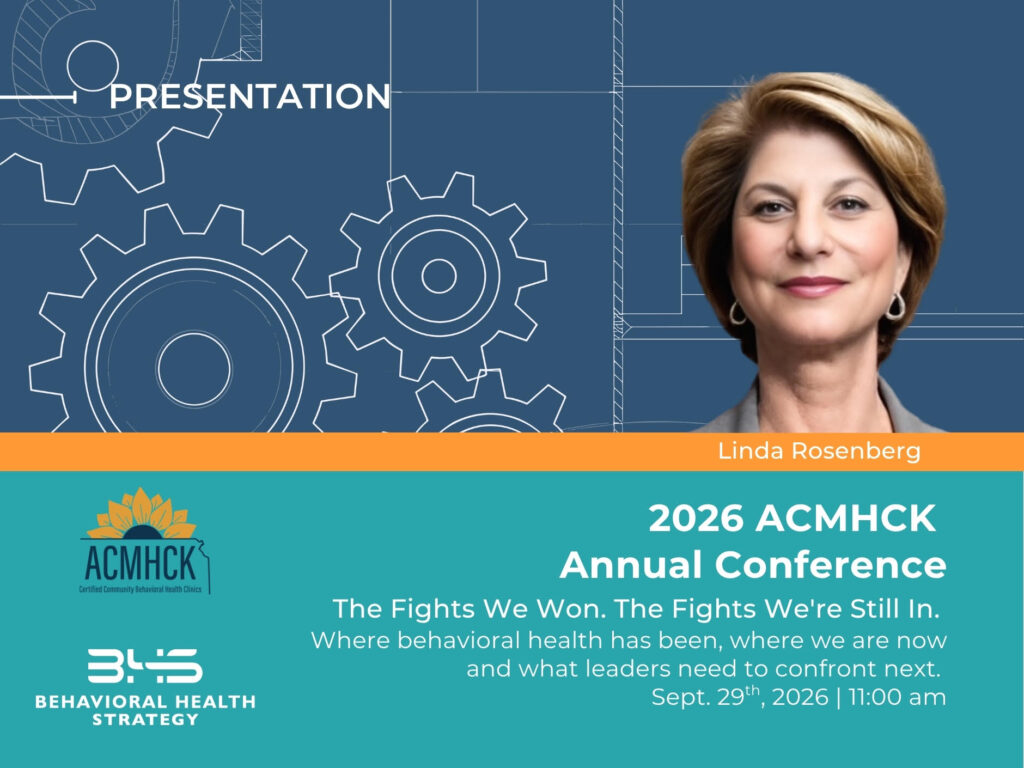
Linda Rosenberg has spent over four decades in our field — as a frontline director, a state mental health commissioner and a CEO who helped pass parity, introduced Mental Health First Aid and built CCBHCs from the ground up. In this keynote, she looks back at what public behavioral health has actually won and pushes hard on what’s still unfinished: a workforce crisis driven by paychecks, not passion; an AI reckoning that’s already underway; and buzzwords — like “trauma-informed” — that may be doing more talking than treating. Expect a candid, provocative conversation, not a retrospective victory lap. Come ready to raise your hand.
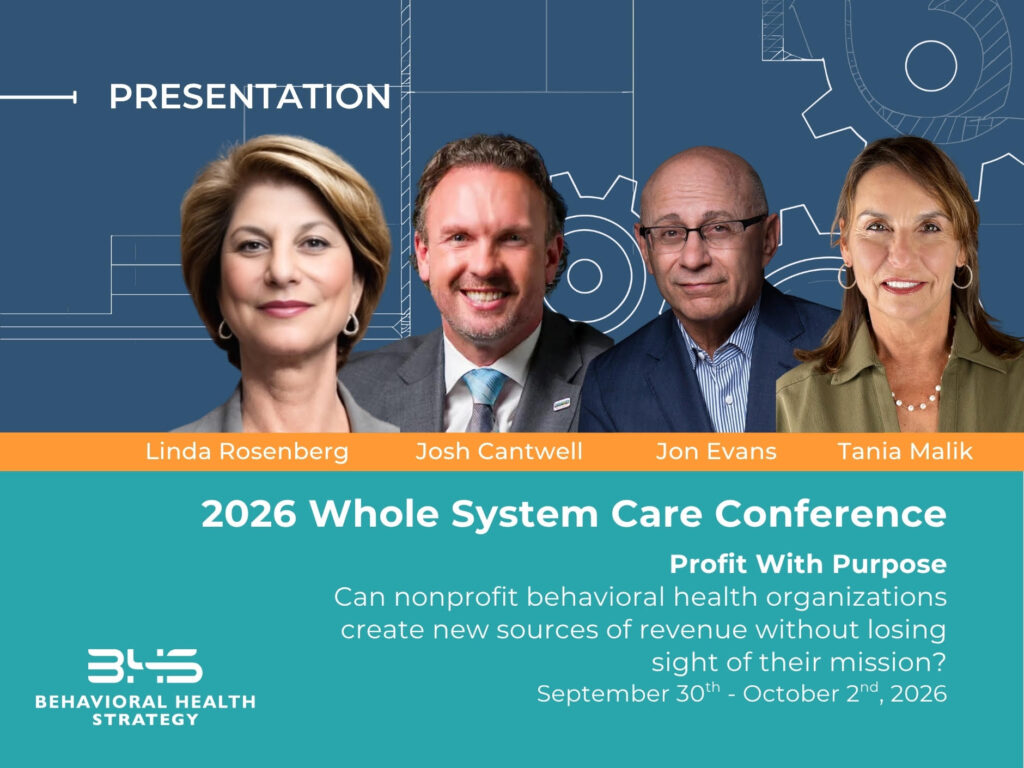
Can nonprofit behavioral health organizations create new sources of revenue while staying true to their mission? Linda Rosenberg, Tania Malik and Jon Evans of Behavioral Health Strategy join Josh Cantwell, President and CEO of GRAND Mental Health, for a panel exploring Profit with Purpose, a mission-aligned private practice model designed to diversify revenue, expand access and create new opportunities for the workforce. The discussion will examine what leaders need to consider when evaluating the opportunity, from organizational readiness and market demand to operations, financial sustainability and the path to a Go, Pause or No-Go decision.

We’re proud to be delivering the closing keynote at the Oregon Council for Behavioral Health Annual Conference, focused on how nonprofit providers can prepare for the next era of behavioral health. The session will explore practical strategies for organizational scale, technology adoption and new revenue models that strengthen mission while building long-term sustainability.

Behavioral health is entering a period of profound change.
Across the country, nonprofit providers, state associations and behavioral health innovators are navigating rising demand for care, workforce shortages, policy shifts and rapid technological change. Leaders are being asked to rethink how their organizations sustain their missions, support their workforce and expand access to care.
Behavioral Health Strategy (BHS) was created to help leaders navigate this moment.
The firm brings together three leaders whose experience spans the nonprofit, policy and entrepreneurial sides of behavioral health:
Linda Rosenberg, former President and CEO of the National Council for Mental Wellbeing and one of the most recognized leaders in the field, helped shape many of the national initiatives that define behavioral health today.
Tania Malik, a healthcare entrepreneur and attorney, has founded multiple digital health companies and brings rare expertise at the intersection of legal strategy, healthcare innovation and business model design.
Jon Evans, a behavioral health entrepreneur and operator, founded and scaled a national telepsychiatry company and has firsthand experience building and growing care delivery organizations.
Together, they created Behavioral Health Strategy to support the leaders building the next chapter of behavioral health.
BHS is a boutique advisory firm focused exclusively on the behavioral health sector. The firm works with a small number of organizations and leadership teams at a time, providing strategic guidance and hands-on execution to help them build durable, sustainable models for the future of care.
The firm’s work focuses on three areas where the field is evolving rapidly:
State behavioral health associations seeking to expand member value, diversify revenue and strengthen their role as enterprise leaders within their state ecosystems.
Nonprofit provider organizations exploring mission-aligned growth strategies—including new care models and private practice subsidiaries that expand access while strengthening financial sustainability.
Early-stage behavioral health companies working to translate promising ideas into real adoption within complex, mission-driven care environments.
Unlike traditional consulting firms, Behavioral Health Strategy remains engaged through implementation and early-stage execution, not just planning. The firm’s advisors combine deep sector knowledge, operating experience and relationships across the behavioral health ecosystem.
Behavioral Health Strategy builds on the advisory work previously conducted under The Office of CEO, but reflects a more focused mission: helping behavioral health leaders position their organizations for long-term success.
The challenges facing the field are real, but so is the opportunity.
Organizations that evolve thoughtfully, strengthen partnerships and build sustainable models will define the future of behavioral health.
Behavioral Health Strategy exists to help those leaders succeed.

Behavioral Health Strategy co-founder Linda Rosenberg recently joined Mohini Venkatesh on the National Council for Mental Wellbeing’s podcast, The State of Mental Wellbeing, to discuss how nonprofit behavioral health organizations can innovate, adapt and build sustainable models for the future.
During the conversation, Linda shares insights drawn from decades of leadership at the National Council for Mental Wellbeing and her current work advising behavioral health organizations through Behavioral Health Strategy. Topics include emerging business models, innovation, organizational sustainability and the evolving role of nonprofit providers as the behavioral health landscape continues to change.
The discussion complements our ongoing work helping organizations evaluate growth opportunities, strengthen operations and prepare for the next generation of behavioral healthcare.
Listen on


